


HairClone’s latest Banking Partner, Dr Bonaros, joins HairClone’s clinical network to be able to offer hair follicle banking services at his clinic in Glasgow, Scotland.
Dr Bonaros graduated from medical school in 2005; following this, he trained with reputable transplant surgeons in Greece, developing his skills as a hair transplant surgeon. In 2016, he starting practicing in Scotland at his clinic, Dr Epameinondas Bonaros. His clinic has won an array of awards, such as the winner of the 2025 ‘Best Hair Restoration of the Year’ from the Scottish Aesthetic Awards, demonstrating their excellence in the field. 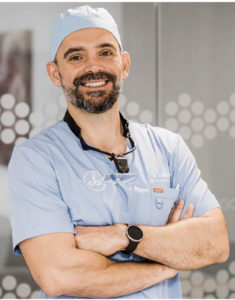
Dr Bonaros is a Diplomate of the American Board of Hair Restoration Surgery (ABHRS), an Affiliate Member of the Royal College of Surgeons of Edinburgh, and licensed with the General Medical Council in the UK, highlighting the importance of patient care and quality performance at the clinic. Additionally, Dr Bonaros is Scotland’s only member of the International Society of Hair Restoration Surgery (ISHRS). He is also a member of the Joint Council for Cosmetic Practitioners (JCCP) and British Association of Hair Restoration Surgery (BAHRS), allowing him to regularly attend conferences to stay up to date with the latest technology and medical research.
His clinic offers a range of treatments, including Follicular Unit Excision (FUE) surgery across a range of locations on the body, and non-surgical treatments such as medications including Finasteride, Minoxidil, and Dutasteride, or Platelet-Rich-Plasma (PRP) therapy.
 Adding to this array of services, Dr Bonaros now offers Hair Follicle Banking through HairClone’s banking service. By surgically extracting 100-120 hair follicles from non-miniaturising regions of the scalp, usually through FUE surgery, these are then shipped to a HairClone facility where they are then cryopreserved. These can then be used by the patient for future cell therapy treatments, such as the one currently in development by HairClone. Cryopreservation of the hair allows the cells to maintain their metabolic activity and genetic profile, meaning that when they come to be used, they maintain the characteristics from when they were initially cryopreserved.